Seven Popular Jewish Mnemonic Devices

The Talmud, in Shabbos 104a says “Make yourself simanim [signs – as study and memory aids] in the Torah and thereby acquire it.

Among the best-known of such devices are:

Gematraios, or numeric equivalents
Rashei v’sofei teivot – acronyms and end letters
Seder AlefBet – alphabetical acrostics
M’shalim – proverbs, parable, allegories
Notarikon or contractions
Simana – catchwords
Grouping and totaling of concepts

Posted in Misc | Comments Off on Seven Popular Jewish Mnemonic Devices

Learn the Parashot of Vayikra with Mnemonics

Mnemonics have been used by many students to help learn a complex list of items.

For example, the first letters of “My Dear Aunt Sue” is can help a child learn the four basic arithmetic operations (Multiply Divide Add Subtract). Or the lines of a music staff “Every Good Boy Does Fine” represents EGBDF. Other mnemonics involve learning a series of silly pictures to help memorize a list via word association.

The Talmud, in Shabbos 104a says “Make yourself simanim [signs – as study and memory aids] in the Torah and thereby acquire it.”

The Torah was divided into 54 “Torah Portions” are Parashot. Each week, Jews study the Parashah of the week, and on that Saturday, the Torah Portion is read in the Synagogue. It can be very useful to know the Parashot by memory.

Please read the silly story first – you may think it’s crazy… but at the end – all will be explained.

If you buy VIAGRA from one of those spam emails, you will SAVE money,

and spend that money to SAVE your CHIMNEY which is falling down.

The CHIMNEY started to fall down when the TASMANIAN devil blew through like a tornado.

After devouring your chimney, he blew through a METS game in New York,

and the METS were SORRY they lost because of the TASMANIAN devil.

They lost so bad, that they built a MOAT around the METS ballpark;

not just any moat, A HAIRY MOAT. They pulled their HAIR out and threw it in the MOAT

because the METS were so SORRY they lost.

The KIDS at the game felt sorry for them, and thought if the KIDS gave them

new SHIN pads, they would be more likely to win next time.

Thank goodness for the KIDDOS SHIN pads.

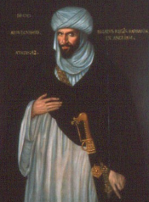
Then, suddenly A MOORE from Morroco, heard about the

their news KIDOS’ SHIN pads. He was a big time gambler,

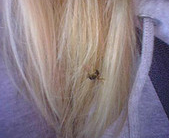
and he wagered all the BEE HAIR in North Africa that they would win the next game.

In case you didn’t know, the MOORE developed a special genetic breeding so that

honey BEE’s would have more HAIR, and it became a very valuable commodity.

You can picture little honey bees with big wigs on their heads – can’t you?

Sure enough, they won the game, and the MOORE was now a wealthy man.

Not only did he get to keep his BEE HAIR, he took the money he made

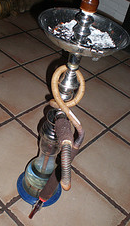
and bought a nice HUKA TIE, you know, the nice neck ties with the pictures

of HUKA’s (yes, the water pipe) imprinted on them.

Now – here are how the capital words above associate to the Parashot (the standard Torah readings) in the book of Leviticus (Vayikra):

  1. Vayikra – Viagra
  2. Tzav – Save
  3. Shmini – Chimney
  4. Tazria – Tazmanian devil
  5. Metzora – Mets Game (Sorrow when they lose)
  6. Acharei Mot – A Hairy Moat
  7. Kedoshim – Kids/Shins
  8. Emor – A Moore
  9. Behar – Bee Hair
  10. Bechukotai – Huka/Tie

Now, if you read the story and practice with another person, you should be able to list all the Parashot in order in maybe 5 or 10 minutes, and be able to recall it for a few days. It’s a good idea to review every week for the first four weeks, then every month for maybe the next six months. Then, potentially you will have it memorized for life.

You can also drill with another person. Ask your friend, what Parashah comes after Tazria (you think back to the Tazmanian devil, which is mentally liked to Chimney and “The Sorry METS”). If you remember the story, you should be able to quote the parashah both before and after Tazaria as Shemini and Metzorah.

I hoped to find a more child friendly word than Viagra – but haven’t come up with anything yet. Obviously, the person learning the story has to know what the silly words mean, and you might not be ready to explain Viagra to your six-year old. Maybe you can use the word “VIGOR” or “VINEGAR” but they don’t work quite as well phonetically.

If you find any “better” words than the ones I chose, please post comments below.

Now you can review with the pictures below

purple pills

Save - clay pot with coins falling out

Chimney

Tazmanian Devil

Logo of Mets Baseball team

Moat around a British-style castle

Shin Pads

a Moore wearing turban, robe, long sword

a bee in a lady's blond hair

a hooka - tobacco smoking device

Posted in Misc | Comments Off on Learn the Parashot of Vayikra with Mnemonics

A Brief History of Hebrew

Hebrew is the language of the children of Abraham, who sojourned in Egypt, were enslaved there, and who were led forth by Moses. They lived in Israel approximately 1700 years. The five books of Moses, called the Torah in Hebrew, or the Pentateuch in Greek, was written in Hebrew.

Hebrew basically ceased to be a spoken language in 70 C.E. when the Romans destroyed the Jerusalem and the temple. However, Hebrew remained alive, via the study of the Torah and use in Jewish prayers.

At first, some thought Eliezer ben Yehudah (1858-1922), was idle dreamer, but today he is known as the restorer of Hebrew as a modern language. When he moved to Jerusalem, Ben-Yehuda became a teacher at the Alliance School, and with his efforts, became the first school where some courses were taught in Hebrew.

By the age of twelve he had been studying in Hebrew for nine years and had read large portions of the Torah, Mishna, and Talmud. His parents hoped he would become a rabbi, and sent him to a yeshiva. However, he became interested in the secular world, eventually attending the Sorbonne in Paris.

Ben-Yehuda created a three-part action plan: “Hebrew in the Home,” “Hebrew in the School,” and “Words, Words, Words.” Before he moved to Israel, he had successfully tried several lengthy conversations in Hebrew. He made the decision to speak only Hebrew with every Jew he met. Althought he was able to speak Hebrew with little problem, there was indeed a shortage of Hebrew words on certain topics.

He got his wife Deborah to agree to raising his son, Itamar Ben-Avi (born in 1882) with only Hebrew. He once became infuriated when he came home, and his wife was singing a Russian song to their son. One of the biggest problem he face was the lack of words that were needed to describe all the daily events and encounters of modern life, including machinery, electricity, airplanes, radio etc…

Ben-Yehuda understood that the revival could succeed only if the younger generation would begin to speak Hebrew with ease. When he came to the Alliance Isralite Universelle School in Jerusalem, students were from different Jewish communities around the world, and Hebrew was the only language they had in common. Ben-Yehudah seized the opportunity to teach Hebrew using a direct system, i.e. with no translations from other languages. After a few months, the students were able to chat in Hebrew about daily topics.

Ben-Yehudah constantly wrote articles in other papers, but eventually began to publish his own newspaper Hatzvi. It’s purpose was to teach adults, both via its content and its language. It was alos used to introduce new words which were desparately needed, such as: editor, telegram, soldier, among others.

One of his culminating works was the “Complete Dictionary of Ancient and Modern Hebrew.” In 1910 he published the first of six volumes, but the ultimate edition completed by his second wife and son was 17 volumes. Ben-Yehuda also founded “Va’ad HaLashon”, the predecessor of the Hebrew Language Academy.

A big moment for Hebrew occured in 1922. The British mandate authorities recognized Hebrew as the official language of the Jews in Palestine. This was the fulfillment of Ben-Yehudah’s dream. Sadly, he died one month later from tuberculosis which had plagued him numerous years. Cecil Roth’s summed up the his life long work and passion: “Before Ben-Yehuda… Jews could speak Hebrew; after him they did.”

Posted in History | Comments Off on A Brief History of Hebrew

The Extra Large “BET” in the First Letter of the Hebrew Bible

When the Hebrew Torah is printed (by modern print or by scribes), there are seventeen occasions in which a letter is printed either larger or smaller than the surrounding letters. Hebrew doesn’t have upper or lower case letters, and this is not just a printer’s “trick”. This actually occurs in the first word, “BERESHIT” which means “In the beginning [of]”.

Scholars have identified three approaches on how interpretation of a verse can be impacted by these extra large or extra small letters. First is “Letter Interpretation” – based on the meaning of the letter itself. The second is “Magnification/Diminuation” – how the size of the letters increases or diminishes the meaning of the word. The third method is “Addition/Omission” – interpreting a large letter as doubled, or a small letter as omitted.

The first book of the Hebrew Bible is named “BERESHIT” after it’s first word (not the Greek word “Genesis”). This first word begins with an extra large letter “BEIT” (BEIS for ashkenazi pronunication). The Ba’al HaTurim (Rabbi Jacob ben Asher of the 1300s), teaches that the Torah wanted to start on a pleasant note, as Proverbs 3:17 states: “Its way are ways of pleasantness and all its paths are peace.” So why the second letter “BEIT” instead of the first letter “ALEPH”? The letter “B” (BEIT) because it is associated with “BRACHA” (blessing), whereas the first letter of the alphabet, “A” (ALEPH) can be associated with the word “ARUR” (curse).

Can you see here, how the Rabbi was using the “Letter Interpretation” method here? He uses the meaning of the letter to interpret the verse. He further tells us that the letter “BEIT” has the numeric value of two. (In Hebrew school, children quickly learn that each letter has a numerical value, the first 10 letters based on the sequence of the alphabet). The number two is associated with duality. If we use our imaginations, to what duality could the first verse of the Bible be referring? Perhaps of heaven and earth, or the physical world verses the spiritual world (the seen as opposed to the unseen).

It could also suggest that the creation of the physical world depends on the male and female, duality of all species. It could also allude to the positive and negative charges of protons/electrons, or the magnetic fields which complement and balance each other.

Hebrew students also know that “BEIT” is not just a letter, it is also the word for “house”. The tabernacle is called the “BEIT HA-MISHKAN” (place of dwelling), and the temple is called the “BEIT HA-MIKDASH” (place of holiness). Thus, the large “BEIT” at the beginning of Gensis can also allude to the first and second temple, which represents God dwelling among men.

Posted in Misc | Comments Off on The Extra Large “BET” in the First Letter of the Hebrew Bible

Secrets of Extra Large Letters in the Torah

If you read an English translation of the Bible, you would never know about the Jewish custom of writing some letters larger or smaller than other letters. You would only see this in a Hebrew text or Torah scroll. 17 times in the five books of Moses, a letter is printed either larger or smaller than the surrounding letters. In Hebrew, there are no capital letters – all letters are normally the same size. The first time this occurs is in the first word, “BERESHIT” which means “In the beginning [of]”.

There are three approaches to these letters: 1) Letter Interpretation – based on the meaning of the letter itself, 2) Magnification/Diminuation – the impact of the size of the letter on the meaning of the word, 3) Addition/Omission – treating a large letter as doubled, or a small letter as omitted.

The first book of the Hebrew Bible is named “BERESHIT” after it’s first word (not the Greek word “Genesis”). This first word begins with an extra large letter “BEIT” (BEIS for ashkenazi pronunication). The Ba’al HaTurim (Rabbi Jacob ben Asher of the 1300s), teaches that the Torah wanted to start on a pleasant note, as Proverbs 3:17 states: “Its way are ways of pleasantness and all its paths are peace.” So why the second letter “BEIT” instead of the first letter “ALEPH”? The letter “B” (BEIT) because it is associated with “BRACHA” (blessing), whereas the first letter of the alphabet, “A” (ALEPH) can be associated with the word “ARUR” (curse).

Can you see here, how the Rabbi was using the “Letter Interpretation” method here? He uses the meaning of the letter to interpret the verse. He further tells us that the letter “BEIT” has the numeric value of two. (In Hebrew school, children quickly learn that each letter has a numerical value, the first 10 letters based on the sequence of the alphabet). The number two is associated with duality. If we use our imaginations, to what duality could the first verse of the Bible be referring? Perhaps of heaven and earth, or the physical world verses the spiritual world (the seen as opposed to the unseen).

It could also suggest that the creation of the physical world depends on the male and female, duality of all species. It could also allude to the positive and negative charges of protons/electrons, or the magnetic fields which complement and balance each other.

The letter “BEIT” is also the word “BEIT” which literally means “house” or “home”. The temple is called the “BEIT HA-MIKDASH” – basically meaning “the house of holiness”. Thus, the large “BEIT” at the beginning of BERESHIT can also allude to the first and second temple, which represents God dwelling among men.

Posted in Misc | Comments Off on Secrets of Extra Large Letters in the Torah

How the Hebrew Language Adds New Words

The ancient Hebrew language is not static. During the last 25 years, over 10,000 words have been added to the Hebrew language. This was required to meet the exigencies of modern life in conversational usage. William Chomsky’s “Hebrew: The Eternal Language” is full of examples.

Some words are borrowed from Indo-European (Latin) languages. A perfect example is the everyday word”TILPHEN” which is the verb “telephone”. Even during Mishnaic Hebrew, words were often borrowed from other languages such as Greek. An example is “HIT’AKHSEN” (received hospitality) from the Greek word “XENIA” meaning hospitality.

The Old New Land (or Altneuland in the original German) is a utopian novel published by Theodor Herzl, the founder of political Zionism, in 1902. What city could be named after this model? If you know that “TEL” means mound or ruin (thus symbolizing old) and Aviv is the month of Spring, representing “new”, then you can see the name of the city “TEL AVIV”.

Hebrew often adds prefixes and suffixes to words to slightly modify the meaning. For example, you can often add the suffix “-ut” to a word. SAMKHUT means “authority” from the root verb SEMEKH” meaning “support”. SIFRUT means “literature” from the noun SEFER meaning book.

Another pattern is for occupations. PASAL means “sculptor” from the familiar word “PESEL” which means “idol”. KANNAR means violinist from the noun “KINOR” meaning “violin”.

Sometimes, you can add the letter “MEM” as a prefix to form a noun. The occurs with Biblical words such as MIKDASH (temple) from KADASH (to sanctify/make holy) and MISHKAN (tabernacle) from SHAKAN (dwell). In Modern Hebrew, we can see such words as MABDED (insulator) from BADAD (insulate)

As in English, two words are combined to form a new word. For example, “goodbye” is a shortend version of “God be with you”. KOLNOA (movie theater or sound pictures) is a blend of KOL (sound) and NO’A (motion). Interestingly, TAPUZ is an orange, from the word TAPUACH (apple) and the first letter of ZAHAV (gold).

English, Yiddish, Russian have contributed to new Hebrew words. SHWITZ means sweat in Yiddish, which inspired the Hebrew word MASHWITZ – a pretneious person. From English, Hebrew has borrowed words such as sweater, garage, and tractor. From Russian, the suffix “Nik” is occassionaly used showing that a person belongs to a certain group, such as KIBBUTZNIK (a man belonging to a Kibutz).

Posted in History | Comments Off on How the Hebrew Language Adds New Words

Eight Points to Consider when Starting Your Hebrew Adventures

Starting to Learn Hebrew

Any student of Hebrew must begin his or her adventure by learning the letters and vowels. This includes being able to sound out, or pronounce written words. Most students begin with the “printed” or “book” style Hebrew, and learn cursive later. While most of Europe and the Americas uses the Latin alphabet, Hebrew is entirely different, consisting of 22 letters and vowels that are written as special symbols above and below the letters.

The beginner student must examine his goals. While some students want to learn to read the Hebrew Bible, other students are preparing for a trip to Israel, and need to learn modern Hebrew. Other students might want to learn how to read the sidur (Hebrew prayerbook).

It makes since to learn the most popular words first, doesn’t it? If learning Biblical Hebrew, why not start with the most popular 400 words. We have put those words on audio-CDs, for learning at home or in your car, and we have also included the same words in our software program.

Let’s compare Modern and Biblical Hebrew. The verb systems are very similar, but Hebrew tends use the perfect and imperfect (past and future) where as Modern Hebrew uses those and a lot of the present tense. Nouns are similar, but Biblical Hebrew might talk about chariots, kings, and prophets, modern Hebrew might talk about plains, trains, and automobiles.

Some students might get some words “mixed-up”, because there are several letters in Hebrew that are silent. For example, the word “ET” could be AYIN-TAV (meaning “time”), ALEPH-TAV (pronounced: “AT” meaing “you feminine singular” or “ET the pointer to the direct object , or even ALEPH-TET (pronounced “ET” meaning “pen’). A good tutorial will point out these similarities and differences.

Hebrew numbers come in two forms, masculine and feminine. So you basically have to learn to count to 10 two different ways. Learning to tell time and doing simple math problems are great ways to enforce the learning of numbers.

Children enjoy learning Hebrew through playing games. One of our games is memory-match, where the student turns over two “cards” at a time. If the numbers match, the cards disappear. Even adults love these types of games.

Most students of modern Hebrew must also learn the cursive letters. This is almost like learning a second Hebrew alphabet, because they are quite different from their printed counterparts. The time-tested method of writing the letters over-and-over on lined paper works today as well as it did years ago.

Posted in Misc | Comments Off on Eight Points to Consider when Starting Your Hebrew Adventures

The Method Behind “At Home with Hebrew”

Hebrew has 22 letters, all of which are considered consonants. In modern Israeli Hebrew, such as newspapers, vowels are not printed. The reader usually makes out each word without the vowels.

Biblical Hebrew in Torah scrolls is also written without vowels. The Massorites later added the vowels in printed texts to resolve and standardize any differences in pronunciation. An example of a Hebrew vowel is the “Patach”, which looks like a small dash written under a letter. It adds the “AH” sound to that letter.

In the software tutorial “At Home with Hebrew”, letters are taught in pairs. Each lesson teaches a pair of letters, and introduces a new vowels or two. In this way, the student is not overwhelmed with too much information too fast.

Sometimes English letters must be used to represent the Hebrew letters, for example “V” for “VET” and “B” for “BET’. The first lesson of “At Home with Hebrew” would teach only these two letters. Nonsense syllables are used at first, such as VAHV, BAHB, BAHVAH, VAHBAH, BAHBEH, BEHBAH, and so on.

Lesson number 2 then teaches two more letters (Gimmel and Dalet). In order not to overwhelm the student with too much new information at once, the new letters are rehearsed with vowels from the prior lesson. The syllables presented might include: DEHG, GEHD, DAHG, GAHD, DEHGAH, DEHDEH, DEHGEH, GAHGEH.

Step by step, one or two more vowels are introduced. For example, the TZEREH, which can be pronounced like “EH” sound. The same consonants are then mixed with the new vowel sounds: For example: DEH, GEH, BEH.

When the end of a lesson is reached, the tutorial returns to consonants that were taught in previous lessons. This helps the student to combine the old material with the new material. Example syllables reviewed might be: BAHBAH, BEED, GOOVOO, BEEGEE, BAHGOO, and so on.

From time to time, a new letter being taught might look like an existing letter already taught. For example, when the letter “RESH’ is introduced, the student has already learned the letter “DALET”. The tutorial program shows teh two letters, side-by-side, so the student can compare and see the sublte differences. Text also explains the differences to make sure it is obvious.

Each lesson proceeds with two additional consonants. By the Lesson 4, all the vowels have been introduced. By the end of Lesson 13, the student should be able to read, i.e. pronounce any Hebrew word that he sees.

Posted in Misc | Comments Off on The Method Behind “At Home with Hebrew”

Hebrew Courses – It’s Easier Than You Think

Have you been attracted to Hebrew, the original language of the Bible, but you thought it’s too difficult: the letters are strange, the language is strange, the language is read Right to Left instead of Left to Right? Well then, I have good news for you. I have found a series of easy-to-use Software Hebrew Courses. The first program is called “At Home With Hebrew”; the second program is “Hebrew Kindergarten”; and the third program is called “Shirei Ha-Shabbat.”

“At Home With Hebrew” is a cool Hebrew Tutorial. Many tutorial programs will give you a word and expect you to pronounce it – almost from the beginning, but, “At Home With Hebrew” is different. First, the creator/developer of the program, Neal Walters, is a professional teacher/trainer and student himself. He knows what it is like to learn a new language; so, he developed this program with regular people like you and me in mind.

You start by learning the Hebrew Alef-Bet (or Alphabet) – click on the character and hear the Hebrew letter pronounced. From there, you’ll learn the vowel sounds which are very similar to the vowel sounds of Spanish or Italian. After that, you’ll be learning words and simple phrases. Andwhat’s cool about the program is you can mouse-over (or point-and-click) on the word and hear it pronounced and see an English transliteration of the word so you can phonetically pronounce it.

The next program in the series is “Hebrew Kindergarten.” Don’t be fooled! This is your next step to learn Hebrew. It picks up where “At Home With Hebrew” leaves off; only, the program introduces you to more advanced grammar concepts.

It’s just like Neal to build continuity into his software packages. With “Hebrew Kindergarten,” you get the same mouse-over (or point-and-click) feature: you hear the word pronounced and you see a transliteration of the word. Butthis program has more to make sure you learn Hebrew: there are quizzes, games, simple video animations, and audio instructional material – you hear Neal having a conversation with an Israeli speaker discussing grammar and pronunciation. This Hebrew course comes complete with a 200 page instructional manual – Simply amazing!

The last program in the series is actually the latest creation from Neal Walters and his crew. It’s called “Shirei Ha-Shabbat: Songs of The Shabbat.” This Hebrew tutorial introduces you to the beautiful sounds of traditional Shabbat-Jewish liturgy.

I can’t help but say it – it’s another cool way to learn Hebrew. You learn two different styles of Canting Hebrew liturgy: Ashkenazi and Sephardi. The program incorporates a feature which allows you to hear two young cantors – one Ashkenazi and the other Sephardi – sing, or cant, some of the songs from the Shabbat Liturgical services. Plus, the program includes all the features previously mentioned above so you learn Hebrew as well: mouse-over (or point-and-click), games, and quizzes.

All in all, I was very impressed by these programs. You learn Hebrew and at the same time you are having fun learning – Now, isn’t that a switch? How many other Hebrew courses on the market can say that?

Posted in Misc | Comments Off on Hebrew Courses – It’s Easier Than You Think

New Jewish Baby: Rituals, Traditions, and Gifts

What joy a newborn baby brings to our homes! The birth of a child is certainly among one of the most life-changing and wondrous events in our lives. This sweet new life touches everyone in a family, from parents and siblings to grandparents, aunts, uncles, cousins and so on. Everyone wants to be involved in some way, whether it?s Mom flying in to help or friends and colleagues sending delicious new baby baskets .

What joy a newborn baby brings to our homes! The birth of a child is certainly among one of the most life-changing and wondrous events in our lives. This sweet new life touches everyone in a family, from parents and siblings to grandparents, aunts, uncles, cousins and so on. Everyone wants to be involved in some way, whether it?s Mom flying in to help or friends and colleagues sending delicious new baby baskets.

Jewish Traditions and Rituals English/Secular Names Naming our children is serious business. It might be the name of a loved one, or someone we highly respect, or a word that brings back a beautiful personal memory.

While there are no hard and fast rules to picking names in the Jewish tradition, there are some customs that Jews generally follow. It is customary for Ashkenazi Jews (descendents of Eastern Europe, Germany, Poland, Russia) to name their babies after a deceased relative. However, for Sephardic Jews (of Spanish and Portuguese descent), it is allowable and an honor to name a child after a living relative (of course one would ask permission first). Either way, it is not necessary to use the exact name, a first initial will do.

? My first two sons, Sam and Harry are after two of their great-grandfathers.” says Jane Moritz, Owner of an online company that specializes in Jewish Traditions.? However, while the great-grandfathers? names were actually Sam and Harry, we could have chosen Stephen and Harvey.”.

In addition to the English name, babies are also given a Hebrew name. Certain ceremonies?including Bris, Baby Naming, Bar/Bat Mitzvah and ketubah-signing– require a Hebrew name. The Hebrew name can be a close translation from the baby?s secular name. It could also just share the first letter. Michael?s Hebrew name might be Moshe. For another option, parents may choose a Hebrew name that sounds beautiful, has a beautiful translation, or reminds them of something meaningful in their own lives. The Hebrew name Meira, means? light.”.

If it?s a boy, it?s a Bris It?s a boy! That means eight days after the birth, a joyous bris, or circumcision ceremony, will take place as long as the baby is healthy. You can expect friends and family to be present at a bris, as it is a time to celebrate.

? The bris is both joyous and stressful.” says Jane Moritz.? It is wonderful to bring home a healthy boy and be surrounded by family and friends for a traditional-laden Jewish ceremony. As a mother, it?s difficult to know that your baby is being strapped down and circumcised. Knowing that generations of males have survived was my only comfort.”.

Following the ceremony, which only takes a few minutes, food is served?most typically bagels and lox, baked goods such as rugelach, black and white cookies, babka and more. The bris may be held at someone?s home, at a social hall or in the synagogue and usually begins with the ha-motzi (prayer over the bread).

The bris is perhaps the most observed tradition in the Jewish religion. While some think circumcision is a matter of hygiene, it is actually a biblical commandment and any health benefits are incidental. The circumcision is considered a physical reminder of the covenant between the Jews and God, whereby the Jews promised to worship one God and in turn become God?s chosen people. Besides being a medical procedure, in Jewish law the circumcision is considered a spiritual experience. The circumcision is performed by a mohel, an observant Jew who is formally trained as a ritual circumciser as well as in the laws and traditions of Judaism.

Unless there are health reasons, the bris is always eight days after the birth?even if that day falls on the Sabbath. For example, if the baby is born on a Wednesday afternoon the bris would be the following Wednesday morning. If the baby is born Wednesday night, the bris would take place a week later on Thursday morning.

Welcoming a girl Over the past 30 years or so in America, it has become customary for Jewish parents to hold a special ceremony for their newborn daughters. While boys are given their Hebrew names at their Bris, girls receive their Hebrew names at a baby naming ceremony, or brit bat, which is typically held during the course of a regular service when the Torah scroll is open. It includes a special blessing giving thanks for a healthy delivery and for the health of the mother. There are no strict rules for these ceremonies, but this life-cycle event is just as important to the family as the bris, and it too signifies the concept of entering into the covenant between God and the Jewish people. The brit bat is scheduled at the convenience of the parents, whether it?s eight days or six months after the birth.

It is customary to serve refreshments or a meal following the ceremony, beginning with the ha-motzi, a prayer over the bread. Help the family celebrate by bringing or sending a ceremonial challah or a kosher gift basket filled with assorted baked goods.

Some terms to know For the bris: In Hebrew, Brit milah (meaning? covenant (of) circumcision”) Ashkenazi Jews say bris milah, Sephardic Jews say, berit milah, and in Yiddish, it is pronounced bris.

For the baby naming: brit bat (the covenant of a daughter); simchat bat (celebration of a daughter); hakhnasat bat l?brit (the entering of a daughter into the covenant).

At a bris, the baby is carried into the room by the kvatter and kvatterin, the Godmother and Godfather. The baby is placed on lap of the Sandek, often a grandparent or close relative, who holds the baby through the circumcision. It is a true honor to be asked to be the Sandek. Often the grandparents perform this role.

As the ritual circumcision concludes with prayer and song, it is customary to invite the guests for refreshments or a meal. This is called a seudat mitzvah, and it is part of the mitzvah of a bris. Typically, a traditional Jewish spread of bagels and lox is served.

Gifts: What to bring or send Whether or not you are going to the bris or baby naming, it is nice to acknowledge the birth. At Challah Connection, our Jewish baby baskets, including our Little Mensch Basket and Shayna Medela Basket combine both food and items for the baby. The new parents may need some help in preparing for the bris or baby naming.


Copyright 2007, Challah Connection (website no longer active).

Posted in Guest Blog | Comments Off on New Jewish Baby: Rituals, Traditions, and Gifts